90% of surveyed schools want to invest in VR in the next 2-3 years – do you know?
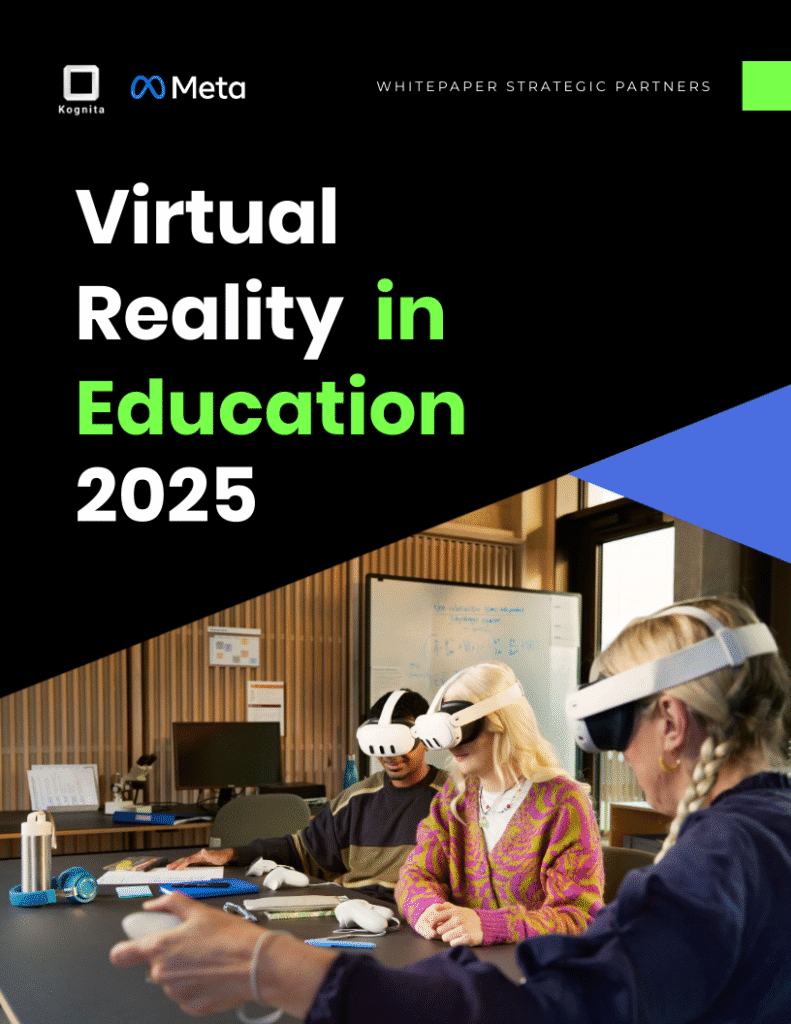
Our latest report, Virtual Reality in Education 2025, explores how immersive technologies are already transforming schools and universities in Poland and why now is the time to take VR in education seriously.
Prepared by Kognita in collaboration with Meta, the report is based on the first large-scale study of VR adoption in Polish education. It includes insights from teachers, school leaders, and university staff across primary, secondary, and higher education. The findings highlight both the immense potential of immersive learning and the practical challenges schools face when adopting this technology.
What you’ll discover in the report – Polish and English versions:
- A clear look at how VR improves engagement, comprehension, and long-term knowledge retention – especially in science, technology, and vocational subjects.
- An overview of how Polish schools are using VR today, and which areas show the most promise for further development.
- Concrete evidence that immersive experiences help students understand abstract concepts, build practical skills, and even develop soft skills like collaboration and critical thinking.
Case studies from schools and universities:
- Warsaw University of Technology: Using VR to teach STEM and teach students develop VR applications rehabilitation and physical trainings
- ATENA Primary School: Blending VR with 3D printing, language learning, and creative projects for early education.
- AWF Katowice: Reducing sedentary behavior and promoting health through immersive physical activities.
- National School of Judiciary and Prosecution: Simulating real courtroom situations and improving legal decision-making.
- Special Education: Adapting VR for personalized learning and therapy for students with special needs.
Barriers and how to overcome them:
Learn what’s holding schools back – costs, content gaps, infrastructure – and how new tools like Kognita Edu and perpetual licensing models make scalable VR education realistic today.
Practical tips to implement VR in schools:
Our report includes a step-by-step implementation guide: choosing the right headsets, managing multiple devices, training teachers, and selecting platforms aligned with national curricula.
Why you should read this report?
VR is a tool that can make learning more meaningful, accessible, and engaging. As more schools explore its potential, the need for strategic planning, proper infrastructure, and thoughtful implementation becomes clear.
Whether you’re leading a school, shaping education policy, or building ed-tech tools, this report provides practical insights and inspiration for using immersive technology to strengthen learning in a real and sustainable way.